Known also as the 'Macedonian sunburst', this 16-rayed star was the symbol of Philip of Macedon and Alexander the Great and of the ancient Macedonian Empire. It appeared on coins, vases, in jewellery and mosaics in all the different regions of the Greek world. Four rays represent the four elements (earth, water, fire, air) and the other twelve represent the 12 gods of Olympus.
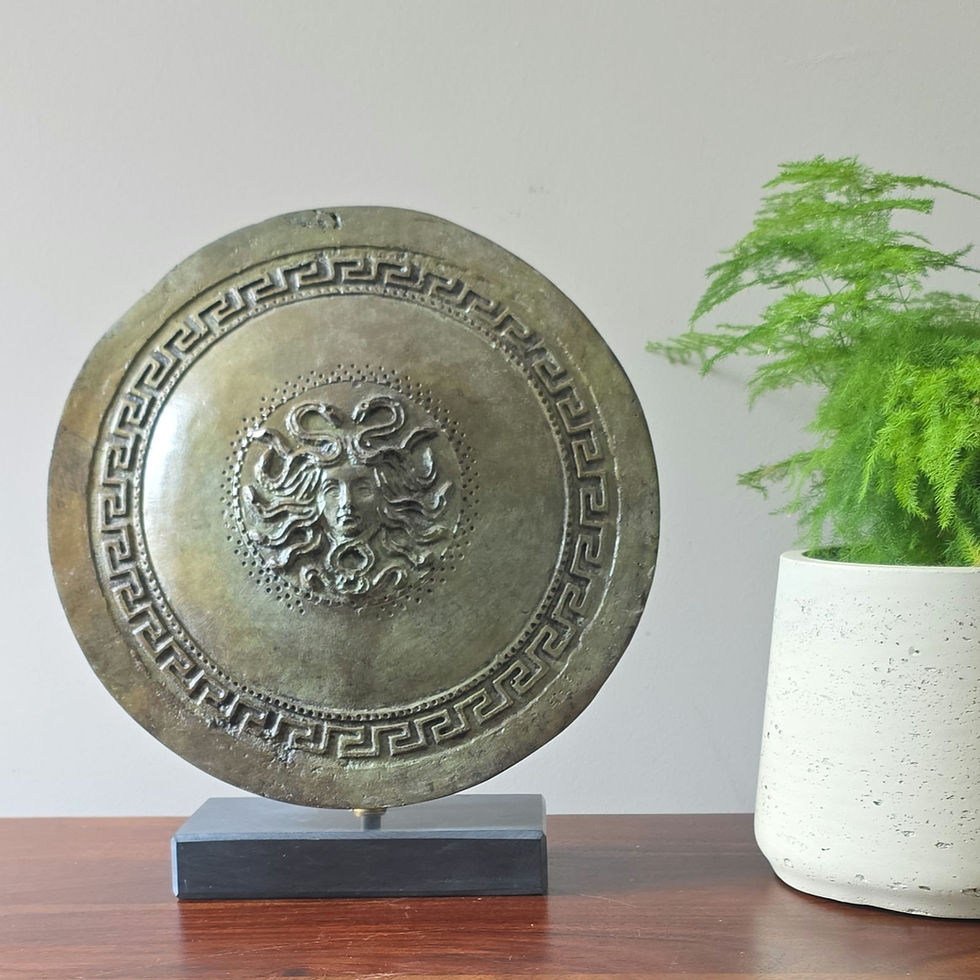
The central star is surrounded by the meandros (or greek key) motif, which symbolised infinity and unity, also thought to represent the labyrinth or maze and the eternal quest for truth.
The ancient Greek shield - the aspis or hoplon - would originally have been made from wood covered in bronze. Measuring approximately 1m in diameter it would not only have protected the bearer, but formed part of the phalanx, the formidable military formation.
bronze shield with rays of Alexander
dimensions
Diameter of the shield: 14cmabout this symbol of Alexander the Great
Known also as the Rays of Vergina and the Macedonian Sunburst, this sixteen rayed motif was the symbol of Philip of Macedon, of his son Alexander the Great, and of the ancient Macedonian Empire.
It appeared on coins and vases, in jewellery and mosaics, in all the different regions of the Greek world. Four rays represent the four elements of earth, water, fire, air, and the other twelve represent the gods of Olympus.
about the bronze collection
The bronze pieces are cast in Greece using the traditional lost wax method. As nothing is mass-produced, there will inevitably be slight variations in texture, patina, and colour. No two pieces are ever the same. If mounted on a marble base, it will be a black or very dark grey base. There may be a variation of some millimetres in the dimensions of the base from time to time.
It's All Greek is proud to have been working with the Semitekolo family foundry since 1999. It has been a privilege to handle these gorgeous pieces and to sell them to customers all over the world.