
free DPD UK shipping over £50 | bespoke worldwide shipping

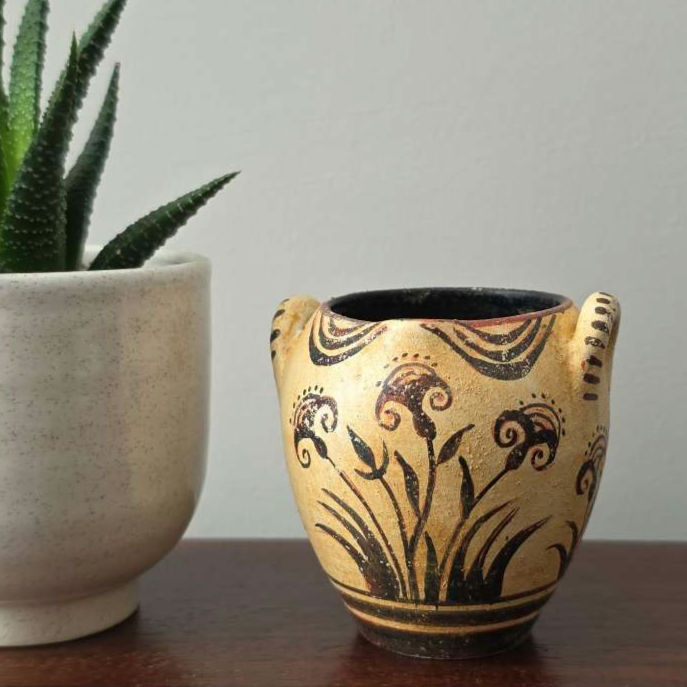


Minoan vase with smiling papyrus
£40.00
A beautiful miniature, with spout and twin handles, finely decorated with papyrus motifs which you can almost feel are swaying in the Aegean breeze! Height: 7cm
Read more below about:
the Minoans
the significance and symbolism of the papyrus
this pottery collection
quantity
the signficance and symbolism of the papyrus
In Minoan Art, the papyrus lily is a symbol of nature’s vitality and renewal. Originally adopted from Egyptian iconography, in the Minoan worldview, this hybrid plant came to embody regeneration, fertility, and the exotic nature of the landscape. Its presence symbolised a deep reverence for the life-giving forces of the natural world and for the changing of the seasons.
In Minoan murals and frescoes, the papyrus lily transformed sacred spaces into divine landscapes. Frescoes from palaces like Knossos and high-end villas at Amnisos depict these tall, stylized plants almost swaying in the breeze. Archaeologists have suggested that these rooms with these gloriously colourful walls served as backdrops for religious ceremonies, creating an eternal spring indoors.
Minoan potters, painters and craftsmen frequently adapted the papyrus motif to decorate luxury trade goods. The plant’s elegant, fan-like crown and slender stalks beautifully suited the curved surfaces of Palace Style amphorae, stirrup jars, and ritual stone vessels. On pottery, the papyrus lily was often represented with native crocuses or palm trees, showcasing a unique artistic synthesis of foreign luxury and local ecology. These beautifully adorned vessels were highly prized across the Mediterranean, exporting Minoan religious prestige and sophisticated aesthetic taste.
As Minoan culture influenced the wider Aegean, the papyrus lily symbol survived on the Greek mainland and on Cycladic islands like Thera. Mycenaean rulers adopted the motif for their pottery and inlaid daggers, though they rendered it in a more rigid, stylized form. By the time Classical Greece emerged centuries later, the literal papyrus lily had faded from prominence, but its structural legacy endured. Its elegant curves inspired the development of classical architectural ornaments, such as the palmette and the volutes of the Ionic column order.
about the Minoans
Flourishing on Bronze Age Crete ca 3000–1100 BCE, the Minoans were a vibrant, colourful and innovative civilization that celebrated the beauty of life, nature's rhythms, and the sea which surrounded them.
Their extraordinary artistic output reflects their love of the natural world. Their sprawling palaces, most famously Knossos, Malia, and Phaistos, were adorned with breathtaking frescoes characterized by fluid lines and vivid colors. Instead of grim battle scenes, these murals depicted graceful leaping bulls, blue monkeys, and delicate saffron crocuses. Their creativity extended to their exquisite pottery, which featured dynamic motifs of octopus and coral wrapping around clay vessels, reflecting a sophisticated society deeply in tune with its environment.
This intimate connection with nature was inextricably linked to their mastery of the sea. Developing a formidable thalassocracy, the Minoans dominated the Aegean as unparalleled seafarers. Their advanced sailing vessels, elegantly depicted in frescoes at Akrotiri on Santorini/Thera, carried olive oil and fine ceramics across lucrative trade networks across the Mediterranean world, returning with exotic ivory and gold.
about this pottery collection
This pottery collection is produced in Greece in the workshop of the Lioulias family, with whom It's All Greek is privileged and proud to have been working since 2004. They also produce our lovely Minoan pottery and fresco pieces, and a small collection of bronzes.