
free DPD UK shipping over £50 | bespoke worldwide shipping

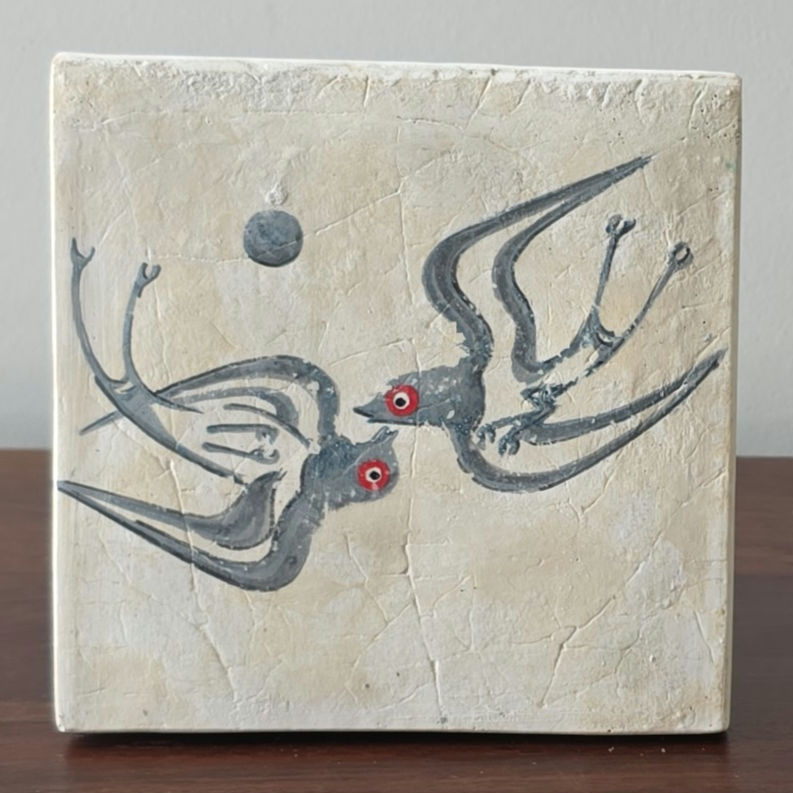


Minoan Spring Fresco detail | twin swallows
£30.00
A snapshot from the famous fresco mural on Santorini, sealed by the colossal volcanic eruption of ca 1600 BCE, to be excavated intact in 1970! It is a gloriously colourful and lively celebration of the arrival of spring. Height and Width: 12x12cm
Read more below about:
the Spring Fresco
the Minoans
these fresco tiles
quantity
the Spring Fresco
The magnificent Spring Fresco is an extraordinary archaeological survival story. This incredible triptych mural is celebrated as the only complete three-walled landscape painting found in the prehistoric Mediterranean.
It was discovered in 1970 during the groundbreaking excavations at Akrotiri on Santorini by the Greek archaeologist Spyridon Marinatos, completely buried and sealed beneath thick volcanic ash after a colossal eruption around 1620 BCE. Because the ash blocked out oxygen and light for millennia, it preserved the painter’s original mineral pigments in flawless condition, frozen in time by disaster. This discovery was a massive milestone for archaeology. While fragments of other murals had been found scattered in the debris, the Spring Fresco was the very first wall painting uncovered perfectly intact and still standing in its original position on the walls of Room Delta 2. It was created in the late Cycladic period, around 20 years before the eruption that sealed the city of Akrotiri for 3500 years.
The rescue was a particularly delicate job. Because the underlying prehistoric plaster wall was highly unstable and threatened to collapse, Marinatos and his team of master restorers had to act immediately. They meticulously peeled the three-walled masterpiece off the stone to save it from destruction, which helped archaeologists pioneer the modern techniques used to rescue ancient wall paintings today
The mural completely ignores the rigid corners of the architecture to create an immersive, wrap-around view of Santorini before its devastating eruption. It portrays a dreamlike world of vibrant, multi-colored volcanic rocks covered in wild blooming papyrus lilies. The lilies sway in the breeze, the swallows flit about, as they do! 7 of them in all: two pairs, and three on their own.
The core spiritual theme of this mural is the eternal cycle of regeneration and rebirth. By showing the papyrus lilies in various stages of growth—from tightly closed buds to full, heavy blossoms—the artist captured the very essence of a changing season. The returning swallows symbolize the triumphant arrival of warmth after a long winter.
about these fresco tiles
They are all made in Greece in the workshop of the Lioulias family, with whom It's All Greek is proud to have been working since 2004.
The tiles are made of a resin compound. Many have a 'craquelure' effect, to replicate the fine pattern of formed on the surface of paintings, in particular due to the ageing of paints and pigments. They are individually painted, by hand, which may result in subtle variations in colour and texture.
Should you wish to put these tiles in a bathroom or garden, it would be wise to apply a coat of transparent PVA sealant to protect them from rain and frost. They are supplied ready to hang, with a sturdy, embedded metal strip or, in the case of the larger ones, two strips which can be connected with picture wire. They can also be incorporated as features within a tiled wall.
about the Minoans
Flourishing on Bronze Age Crete ca 3000–1100 BCE, the Minoans were a vibrant, colourful and innovative civilization that celebrated the beauty of life, nature's rhythms, and the sea which surrounded them.
Their extraordinary artistic output reflects their love of the natural world. Their sprawling palaces, most famously Knossos, Malia, and Phaistos, were adorned with breathtaking frescoes characterized by fluid lines and vivid colors. Instead of grim battle scenes, these murals depicted graceful leaping bulls, blue monkeys, and delicate saffron crocuses. Their creativity extended to their exquisite pottery, which featured dynamic motifs of octopus and coral wrapping around clay vessels, reflecting a sophisticated society deeply in tune with its environment.
This intimate connection with nature was inextricably linked to their mastery of the sea. Developing a formidable thalassocracy, the Minoans dominated the Aegean as unparalleled seafarers. Their advanced sailing vessels, elegantly depicted in frescoes at Akrotiri on Santorini/Thera, carried olive oil and fine ceramics across lucrative trade networks across the Mediterranean world, returning with exotic ivory and gold.